The interview was posted on Facebook and Instagram. Here it is in its entirety for those readers who do not follow us on social media. A heartfelt thanks to Stacy Nicholson for her generous support of the indie writing community.

Please share a few sentences about yourself, and how would you describe your writing style in your own words?
I started writing poetry in 1981 at the young age of 13. I had returned home to live with my parents after a harrowing year at a very well-reputed girls’ boarding school in India. I did not realise it at the time, but I had been the victim of severe bullying at a very vulnerable age for a girl. It took me almost four decades to get over it, to regain my self-confidence and heal, and to step more fully into my power.
I believe that the trauma unleashed the poet in me. Needing an outlet to express my raw and powerful emotions, I started writing. The themes, maturity, and depth of my poems written as a young girl belied my age, and I now believe they might have been memories from a previous life. Hence the title of my poetry series, Memories from another Lifetime.
I wrote copiously in the 1980s, and then life took over. The handwritten poems were stored away in cardboard boxes and forgotten.
After a hiatus of almost four decades, I started writing again. I realised then that the time had come to publish my old poems, and I launched my poetry blog in November 2021. My mission is to make the voice of my younger self heard. Since 2022 I have published five volumes of my poems written as a young girl in the series Memories from another Lifetime – Pain, Love, Desire, Soul, and Friends. The sixth and final volume, Twin Flames, was released in April 2026, and it consists of poems written in more recent years.
My writing style has been described as ethereal and even hauntingly beautiful! My poems are very lyrical, even though they describe intense emotions, such as pain, love, longing, and loss. Many people are not ready to confront or acknowledge such raw and intense emotions within themselves, and at the same time my poems resonate deeply with others.
How does poetry help you express parts of yourself that prose cannot?
For me, writing poetry is akin to emotional downloads! They are brought on, so to speak, by strong emotions needing to be expressed immediately. Nothing is planned; I have a very intuitive writing process. The poems come from deep within. For me, writing prose would be a very structured and conscious process; I would not be able to express such intense emotions naturally or so deeply through prose. I feel prose would lack the imagery, flow, and freedom of expression that poetry allows me.
What role does vulnerability play in your writing?
Everything, really! I write about very deep and personal feelings, even private feelings. This comes naturally to me as poetry is my way of expressing raw and honest emotions. For me, the vulnerability actually comes from sharing my poems with the world through my blog and poetry books. I’m literally putting myself out there, so to speak.
Is spirituality an important part of your writing? What message do you hope readers take away from your poetry and books?
Spirituality is a very important part of my writing, and I believe that spirituality has always played a role in my life. Many of my poems also have a spiritual undertone. However, spirituality is not simply religion. For me, spirituality means a belief in something greater than ourselves, in a higher power, in the soul’s purpose and journey, in soul contracts, in karma, and in destiny.
The message that I hope people will take away from my poetry and books is that we are all on a spiritual journey in this lifetime, but we are not alone in this journey. We share the human experience, with all its joys and sorrows, and some emotions are universal. This is why I’m always grateful when people tell me that my poems resonate with them.
If you had to choose one book that defines you as a writer, which one would it be and why?
That is a very good – and difficult – question! Each one of my books expresses a different aspect of me. As I mentioned, spirituality is a very important part of my writing and my life, so if I had to pick one book, I’d say it is Soul, my fourth volume. The poems I selected for Soul are particularly spiritual in their themes.
Several of the poems in Soul witness a questioning soul, which seeks answers and experiences inner conflict. I really believe that we are all on a spiritual journey in this lifetime, seeking our own soul’s Truth.
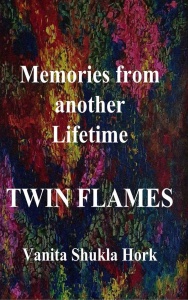
What personal truths or experiences did you bring into your last book Twin Flames (Memories from Another Lifetime)?
I think there are a lot of interpretations out there of what twin flames are, but for me, the twin flame journey has ultimately been a spiritual and karmic one. Some of us meet people who have a profound impact on who we are and who we become. They come into our lives as agents of the Universe and destiny, for us to evolve, end karmic cycles, work through deep soul wounds, and fulfil our soul’s purpose in this lifetime. Even though I experienced the twin flame journey through human emotions such as love, loss, pain, and healing, this is really a journey of the soul, from darkness (as in the poem Eclipse) to light (as in Sunrise).
What symbolic elements or motifs (pattern/meaning) should readers pay attention to?
The twin flame journey is one of pain and healing. A recurring theme is the parting of ways, of letting go, of saying goodbye, of deep loss, until healing occurs and one is ready to release the pain and move on. The soul is transformed forever.
How did you approach writing about the intense emotional bond between the twin flames?
As mentioned earlier, my poems are like emotional downloads, and I have a very intuitive writing process. The poems in Twin Flames came to me by themselves from deep within, I didn’t write them intentionally, so to speak.
What has poetry meant to you throughout your life, and what wisdom would you share with new poets who may be struggling to express themselves?
Ever since I started writing at the age of 13, poetry has been my refuge and a way of expressing very deep and intense emotions, instead of bottling them up. It’s been very cathartic! My advice to new poets who may be struggling to express themselves is to have faith and trust in themselves, and to let the feelings flow freely in their writing without self-censure. We all have unique voices, and they must have the courage to claim theirs. They must be true to themselves in their writing; their vulnerability and emotional honesty is what will make their poetry beautiful.
What do you feel is your soul’s purpose as a writer?
Beautiful question! I believe my soul’s purpose as a writer or poet is to end old karmic cycles from previous lifetimes, to wipe the slate clean, and emerge stronger in this lifetime. I also want my poems to reach and touch people, to inspire and comfort them, to make them realise that they are not alone on their journey.
Thanks once again to Stacy Nicholson for the interview!
Stacy Nicholson is a poet and author who currently resides in Melbourne, Australia. Her books are available on Amazon and at other retailers.